The Impact of Generative AI on the Digital Humanities: Disruption in Research and Education
Event organised by The Alan Turing Institute's Humanities and Data Science Interest Group and the Bodleian Libraries
The Turing Humanities and Data Science event on 21 June 2024 brings together experts to explore both the positive and negative disruptive potential of generative AI in research, education, and creative industries.
The event, organised by the Turing special interest group "Humanities and Data Science" and hosted by the Bodleian Libraries, features talks and discussions addressing key topics such as the transformative impact of AI on research and education (Ioannis Votsis), experiential learning and training AI models (Chris Birchall), media tokenization and attribution in cultural and creative industries (Frances Liddell), innovations in email archiving and sensitive information handling using generative AI (Peter Chan), and the intersection of generative AI with EU policy and governance in creative arts (Daria Onitiu).
Attendees can expect a deep dive into applications of generative AI, its challenges and implications for academia and beyond, highlighting the need for responsible and creative integration of these technologies.
Lunch and refreshments will be provided for those attending in-person.
Programme
| Time | Session |
|---|---|
| 12:30 | Lunch for in-person attendees |
| 13:30 | Welcome and Introduction to the Humanities and Data Science Turing Special Interest Group |
| 13:45 |
Panel 1 (online speakers)
|
| 14:45 | Break |
| 15:00 |
Panel 2 (in-person speakers)
|
| 15:45 | Discussion |
| 16:30 | Event finishes |
Speakers

Dr Frances Liddell is a post-doctoral research associate on the EPSRC-funded DECaDE Centre for the Decentralised Economy, Design Informatics, University of Edinburgh and an associate research fellow at the Arts & Antiquities Blockchain Consortium, New York. She holds a PhD in Museum Practice from the University of Manchester and an MA in Arts Management and BA(Hons) in Art History. Her research interests focus on emerging and decentralising technologies and how these might be a tool in understanding themes including participation, digital materiality, and ownership design.

Chris Birchall is a Lecturer in Digital Media, co-convener of the Digital Culture research group and member of the Political Communication and Critical Data Studies research groups. His career was initially in IT and software, but after postgraduate study in GIS sparked his interest in public participation in local democracy he moved on to study the role of technology in the public sphere and the effects of technological mediation of the social world. His research interests include digital methods and their application to the study and practice of digital citizenship, political communication online, and mobile and digital technologies and social change.
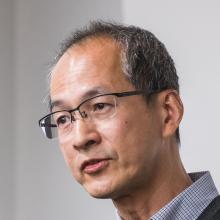
Peter Chan is renowned for his interdisciplinary knowledge in digital archiving, spanning Digital Archaeology, Web Archiving, and Generative AI. His career in this field began when he was appointed as the first Digital Archivist at Stanford University Libraries in 2010. From 2013 to 2019, Chan spearheaded the ePADD project, which developed software to aid in the appraisal, processing, discovery, and delivery of email archives. This project earned acclaim for its innovation and impact, receiving the 2017 NDSA Innovation Award and the 2018 DPC Digital Preservation Award. Currently, Chan serves as the Web Archivist at Stanford Libraries.

Dr Ioannis Votsis holds degrees from the University of California Berkeley (BA) and the London School of Economics (PhD). He is currently an Associate Professor in Philosophy as well as the Head of the ‘Reimagining Higher Education in the Age of AI' research cluster at Northeastern University London. His main areas of expertise are the philosophy of science, the philosophy of artificial intelligence and meta-philosophy. He has previously taught and/or conducted research while based at or visiting the universities of Athens, Bristol, Düsseldorf, LSE, Pittsburgh and Stanford. In his spare time, he likes to code and has developed The Logic Calculator.

Abstracts
ORA (Ownership, Rights, and Attribution) is a novel technical framework for media tokenisation which uses distributed ledger technologies (DLTs), smart contracts, non-fungible tokens (NFTs) and the C2PA standard for content authenticity to explore alternative media ecosystems. ORAgen is a web application that demonstrates the technologies underlining the ORA framework by allowing users to create, tokenise, licence, and remix simply colour collages. Our ongoing research at DECaDE research centre uses this online demonstrator to understand how the emergent technical features, qualities, and constraints of media tokenisation, intersect with the real needs and challenges that professionals in cultural and creative industries (CCI) face, and traditional legal and cultural interpretations of ownership, rights, and attribution. This talk will highlight how this demo has been employed to reveal the value and challenges of attribution across the cultural and creative industries, and how this might offer insight into the growing interest and usage of generative AI in these fields.
AI has the potential to severely disrupt how we conduct research and education. Whether the disruption is positive or negative depends on us. One thing we cannot afford to do is ignore it, as this powerful technology is here to stay. In this talk, I will briefly explore some potentially ground-breaking applications of AI in the domains of research and education, both within academia but also beyond it (e.g. GLAM institutions). I will argue that there is at present quite a bit of hype surrounding AI, particularly the approach known as ‘generative AI'. Truly radical transformations of the way we carry out research and impart education will have to wait for more mature versions of the technology, especially those that successfully marry together symbolic and neural processing, but also for the maturation of other technologies that enable the collection of more fine-grained data.
Large Generative AI in creative arts are shaping the creation and consumption of content, raising some old as well as some new questions at the forefront of EU regulation and governance. This talk provides a statement how framing Large Generative AI in creative arts for policy requires a multidisciplinary approach to the design, use and regulation of these technologies. It looks at the opportunities for artists, creators and fashion designers to employ a creative critique of AI and how a socio-legal framework should feed into the responsible usage of these technologies.
Event Details and Registration
Registration has now closed.
Location
Lecture Theatre, Weston Library, Broad Street, Oxford, OX1 3BG and online via Zoom